

If you’ve ever wondered how Netflix knows exactly what you want to watch, or how supermarkets somehow predict when to restock your favourite snacks, the answer is the same: data.
Behind every smart business decision, there’s a team of analysts taking thousands (sometimes millions) of messy numbers and turning them into a clear story.
And here’s the good news: you don’t need to be a coding genius or a maths prodigy to join them. In fact, many Data Analysts in the UK started in completely different careers: teachers, administrators, customer service reps, even retail workers, before finding their way into this field.
So if you’re scrolling through job ads and thinking, “Could I really do this with no experience?” the answer is yes. You can.
The path isn’t always obvious, but it is absolutely possible. We’ll walk you through everything you need to know and provide links to resources and real-world examples to get you started.
What Does a Data Analyst Actually Do?
A Data Analyst transforms raw data into actionable insights that drive business decisions. They work with numbers, patterns, and trends to help organisations understand what’s happening, why it’s happening, and what they should do next. This role can vary significantly depending on the industry and company size, but the core mission remains the same: make data understandable and useful.
Let’s look at a real-world example in the United Kingdom: Tesco’s supply chain optimisation.
As one of the largest supermarket chains in the UK, Tesco handles millions of transactions daily across thousands of products. Data analysts play a crucial role in ensuring that popular items are in stock while minimising waste from perishable goods.
Your job could involve analysing purchasing patterns, predicting demand based on seasonal trends, weather data, and local events, and then recommending optimal stock levels for each store location. This isn’t just theory; this type of analysis directly impacts whether customers find what they need on the shelves and whether the business runs profitably.
Why Data Analysts Are in Demand
We live in a world that constantly produces data. Every click, purchase, delivery, customer complaint, and review leaves a digital trail.
But raw data on its own is useless. It’s like having millions of puzzle pieces dumped on a table. You’ll never see the full picture without someone organising and assembling it.
That’s where Data Analysts come in. They give shape and meaning to the noise, helping organisations see what’s really happening:
- Did last month’s sales drop because of bad weather, poor marketing, or something else?
- Are customers leaving because of price, service, or competition?
- Which regions or products are outperforming, and why?
The analyst digs in, pulls out the answers, and presents them in a way decision-makers can act on.
[Pro Tip] UK salaries: According to Reed and Indeed, junior Data Analysts in the UK typically earn between £28,000–£40,000, while experienced analysts can climb well beyond £60,000 (specialised roles in data science and BI often push into six figures).
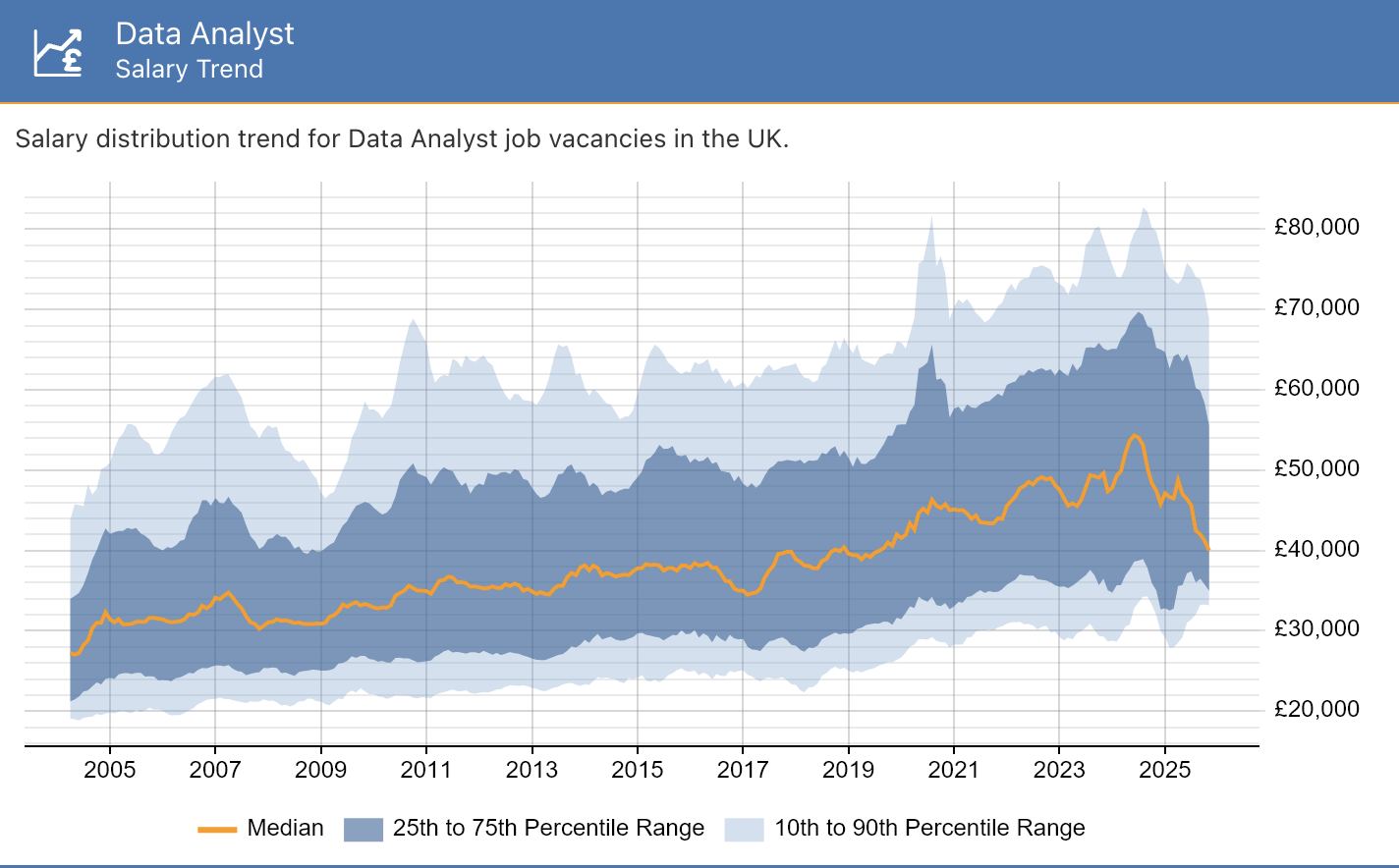
Image from itjobswatch.co.uk
And this demand cuts across every industry:
- The NHS, where analysts track patient outcomes and reduce waiting times
- Retailers like Tesco, who use data to optimise supply chains
- Banks and fintech firms, predicting spending trends and risk
- Start-ups, where lean teams rely on data-driven decisions to survive
- Local councils, using data to improve public services and resource allocation
In short: if you can read the numbers and explain them clearly, you’ll always be valuable.
What Responsibilities Could I Have as a Data Analyst?
As a data analyst, you could hold a more junior or senior position in the team, meaning these responsibilities can change depending on your experience, organisation, and industry. Ultimately, your biggest responsibility at any level is to support data-driven decision-making and deliver insights that are accurate, timely, and actionable. Here are the common tasks you may be involved with:
Data Collection and Preparation: Where Do We Start?
It will be part of your responsibility to gather data from various sources, whether that’s databases, spreadsheets, APIs, or external datasets. You’ll then clean this data, removing duplicates, handling missing values, and ensuring accuracy before any analysis begins. This stage often takes up 60–70% of an analyst’s time, but it’s critical – garbage in, garbage out, as they say.
Analysis and Pattern Recognition: What’s Actually Happening?
As you have one of the clearest views of the data, you’ll identify trends, correlations, and anomalies that tell the story behind the numbers. These could include seasonal patterns in sales, customer behaviour shifts, or operational bottlenecks. You’ll use statistical techniques and analytical thinking to separate signal from noise, focusing on what truly matters to the business.
Visualisation and Reporting: How Do We Show This?
One of your key skills will be translating complex findings into clear, visual formats. When it comes to presenting insights, you’ll be creating dashboards, charts, and reports that non-technical stakeholders can understand at a glance. Making data accessible is what turns your analysis into action; without good visualisation, even the best insights can be overlooked or misunderstood.
Stakeholder Communication: Who Needs to Know?
As the word “analyst” suggests, you’re not just working with data, you’re working with people. You’ll be presenting findings to managers, responding to ad-hoc data requests, and explaining your methodology when questioned. Taking the lead on communicating insights is something data analysts should embrace to build confidence in the data and drive better business outcomes.
Problem-Solving: What’s the Root Cause?
Analysis doesn’t always follow a predictable path, and it would be your responsibility to dig deeper when something doesn’t make sense. This would link with your analytical responsibility, investigating unexpected results and questioning assumptions. Being thorough as an analyst will help build trust within your team and with stakeholders, influencing the quality of decisions positively.
Continuous Monitoring: Is This Still True?
Good analysis isn’t a one-time exercise.
You’ll set up processes to track key metrics over time, alerting stakeholders when something changes. Without regular monitoring, insights can become outdated, and opportunities or risks may go unnoticed. Another reason continuous monitoring is key is that business conditions change; what worked last quarter might not work this quarter.
All the mentioned responsibilities play an important part in making data work for the business, and where projects don’t always look the same, neither will your day-to-day tasks. With more experience, these skills should become easier, shaping you into a highly valuable data professional.
What Traits Should I Have as a Data Analyst?
A strong data analyst has technical skills they need to master, but what about personal traits? What personal characteristics could positively influence your effectiveness as a data analyst?
Curiosity and Critical Thinking
We’re going to start with curiosity, because without asking “why,” the rest falls apart. This would mean having a genuine interest in understanding what drives the patterns you see. The ability to question assumptions and dig deeper when something doesn’t add up will be critical to uncovering genuine insights rather than just surface-level observations.
Attention to Detail
Being detail-oriented is essential. One misplaced decimal point or overlooked data entry error can completely change your conclusions. As the analyst and often the last line of defence before insights reach decision-makers, you’re the person who should catch these issues before anyone else does.
Communication Skills
You might discover the most brilliant insight in the world, but if you can’t explain it clearly to non-technical colleagues, it won’t matter. Things can’t stay locked in technical jargon; translating complex findings into plain English is what makes you valuable to the business.
Logical and Structured Thinking
Finally, the ability to break down complex problems into manageable steps is critical. Data analysts must have the patience to work through problems methodically, testing hypotheses and ruling out explanations one by one. These traits together form the foundation of a successful data analyst. They enable you to navigate messy datasets and deliver insights that genuinely help your organisation succeed.
Do You Need to Be “Good at Maths”?
This is one of the most common fears people have. The short answer: no. At least, not in the way you might think.
You don’t need to be a mathematician. What you do need is:
- Logical thinking: following a trail of evidence
- Curiosity: asking the right “why” questions
- Attention to detail: spotting anomalies or errors
- Basic numeracy: understanding percentages, averages, and trends
For example, imagine you notice customers keep returning a particular product. A mathematician might want to build an equation to model the returns. A Data Analyst? They’d start by asking, “Why are people sending this back?” Then they’d look at patterns: is it happening in certain regions? At certain times of year? With certain types of customers?
It’s about connecting dots, not solving abstract equations. That’s why anyone can become a Data Analyst with the right training.
The Essential Tools and Technologies You’ll Need to Master
Every career path has its own toolkit. For project managers, it’s Agile and PRINCE2. For analysts, success depends on mastering a combination of data extraction, manipulation, and visualisation tools. According to job board analysis from ITJobsWatch and Reed, certain tools appear far more frequently than others in UK Data Analyst job listings.
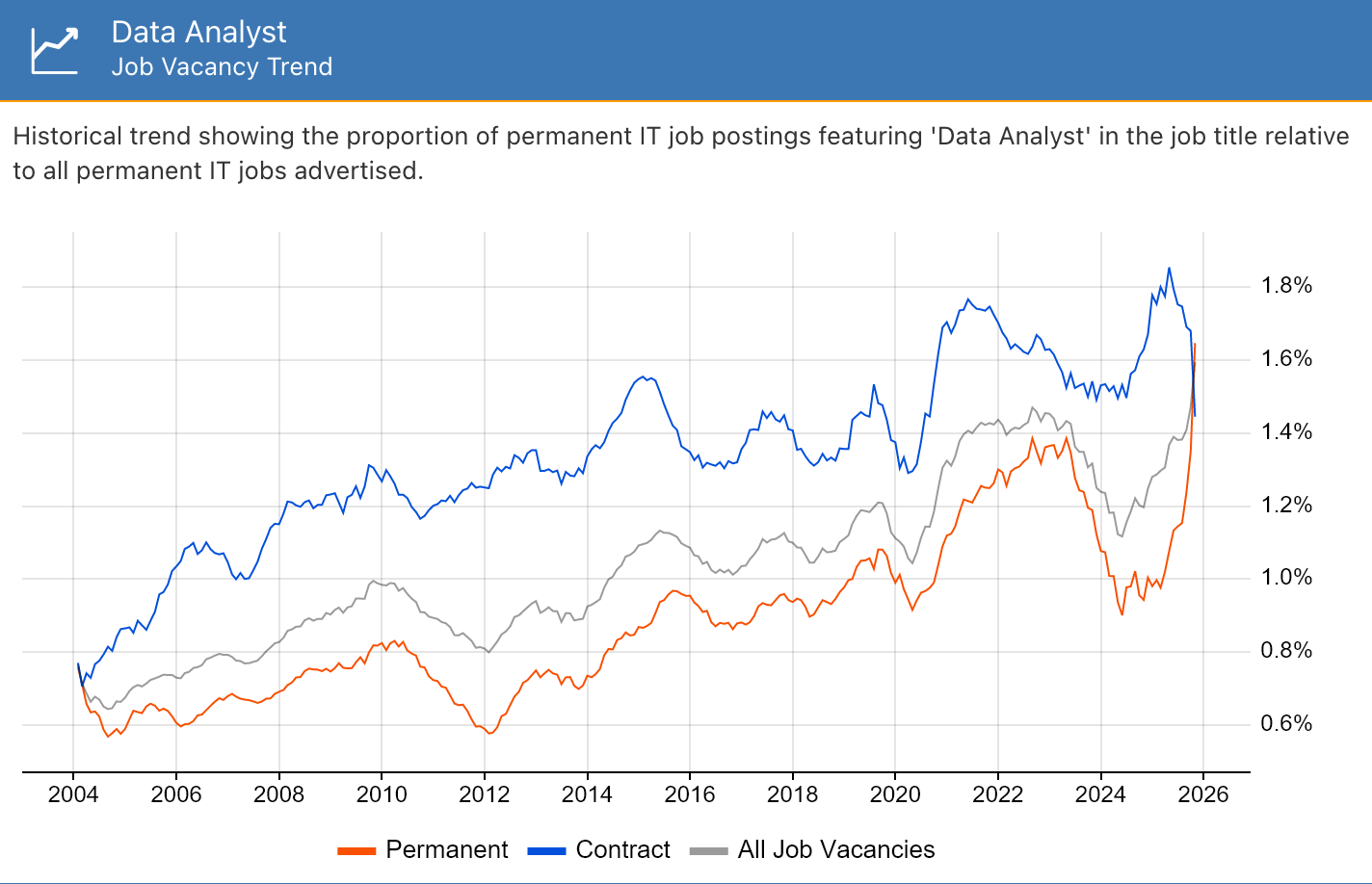
Image from itjobswatch.co.uk
SQL (Structured Query Language): Your Data Foundation
Almost every organisation stores information in databases. SQL is how you query those databases, like asking a librarian to find the exact book you need from a million titles.
Example query: “Show me all customers in Birmingham who spent more than £200 in December.” SQL pulls that answer in seconds.
SQL appears in approximately 70–80% of Data Analyst job listings in the UK. Whether you’re analysing NHS patient data, supermarket sales, or fintech transactions, SQL is non-negotiable. The good news? Basic SQL can be learned in a matter of weeks, and you’ll be writing useful queries almost immediately.
Microsoft Excel: The Universal Analysis Tool
Don’t underestimate Excel. While it might seem basic compared to flashy programming languages, Excel remains one of the most widely used tools in business analysis. Pivot tables, VLOOKUP, conditional formatting, and basic formulas are skills you’ll use daily.
Excel is particularly important for UK entry-level roles, as many smaller businesses and teams still rely heavily on spreadsheets. Mastering Excel also builds foundational thinking that transfers to more advanced tools.
Power BI: Bringing Data to Life
If SQL gets you the raw data, Power BI makes it understandable and actionable.
Think interactive dashboards: instead of handing over 25,000 rows of sales data, you give managers a live chart to filter by region, product, or timeframe instantly. They can drill down, ask “what if” questions, and spot trends in seconds.
Power BI is Microsoft’s answer to business intelligence. It’s hugely popular in UK organisations, especially in government, healthcare, and large corporations. It integrates seamlessly with Excel and SQL Server, making it a natural choice for many teams.
This isn’t just nice to have. It’s often the difference between data being ignored and data driving real decisions.
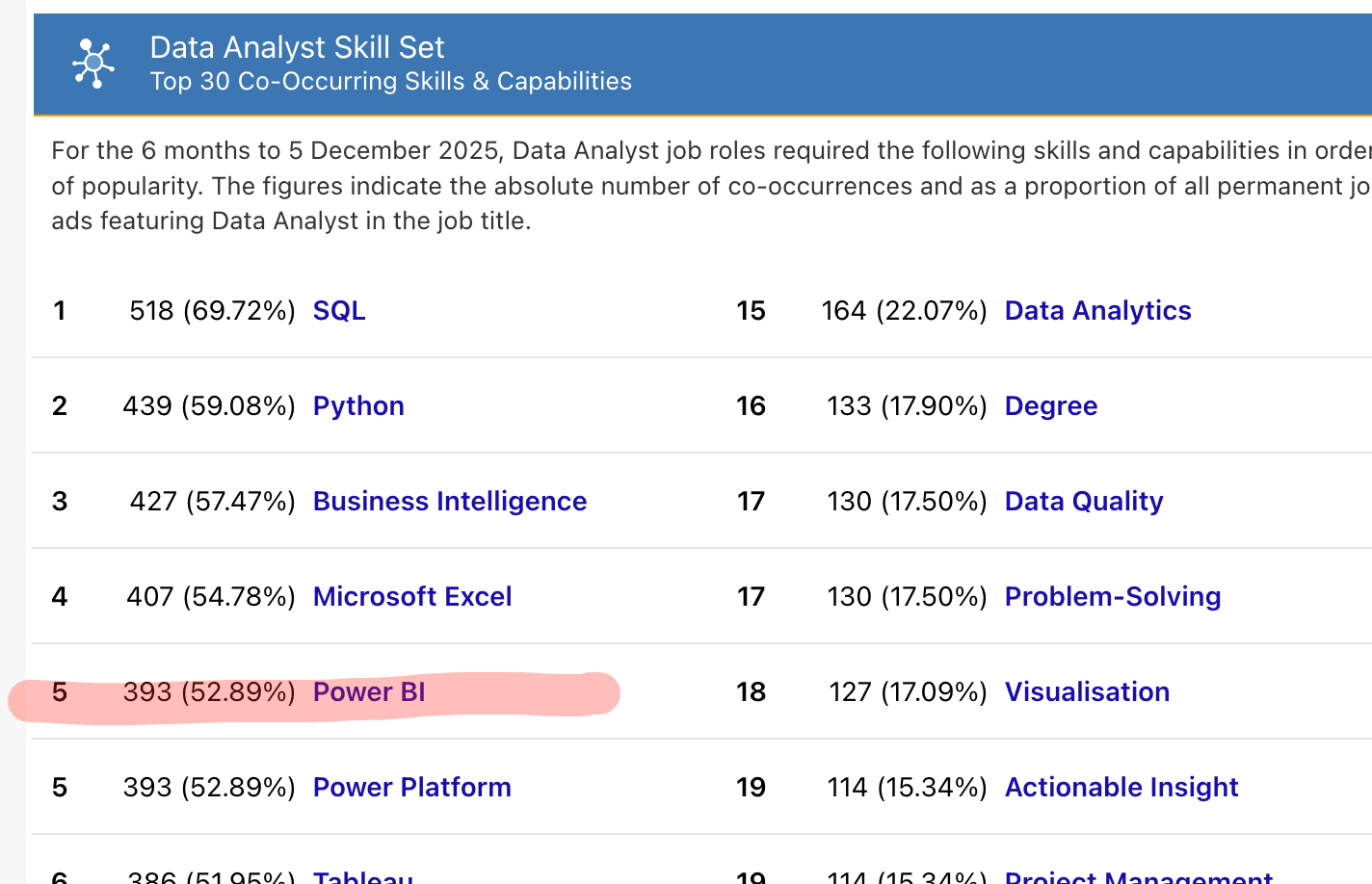
Image from itjobswatch.co.uk
Python: The Programming Powerhouse
Python has emerged as one of the most versatile tools for data analysis. Libraries like Pandas (for data manipulation), NumPy (for numerical computing), and Matplotlib/Seaborn (for visualisation) make Python incredibly powerful for handling complex datasets.
While not always required for junior roles, Python appears in roughly 40–50% of UK Data Analyst positions, and that percentage increases significantly as you move toward more senior or specialised roles. Learning Python opens doors to machine learning, automation, and advanced statistical analysis.
Tableau: The Visualisation Specialist
Tableau is another leading data visualisation tool, particularly popular in consulting, finance, and tech companies. While Power BI dominates the Microsoft ecosystem, Tableau often wins in organisations that prioritise sophisticated, interactive visualisations.
Many analysts learn both Power BI and Tableau, as they each have strengths. Tableau appears in approximately 30–35% of UK Data Analyst job listings.
Which Tools Should You Learn First?
Based on UK job market data, here’s our recommended learning sequence:
- Excel: Universal foundation (1–2 weeks for basics)
- SQL: Essential for data extraction (2–4 weeks for job-ready skills)
- Power BI: Key visualization tool (3–4 weeks to build dashboards)
- Python: Expanding your capabilities (ongoing, but useful within 2–3 months)
This combination gives you the strongest foundation for UK entry-level roles. As you gain experience and identify what your target employers value most, you can add Tableau and other tools.
Foundation Level Courses to Consider as a Beginner
The key is selecting recognised certifications that employers actually look for. According to job board analysis, certain certifications appear repeatedly in Data Analyst job descriptions across the UK.
Our recommended courses for beginners are below. To improve your chances of employment, we’d focus on the most in-demand certifications first, giving you more job opportunities to apply for.
Google Data Analytics Professional Certificate
The Google Data Analytics Certificate provides comprehensive theoretical and practical knowledge needed to start your career as a data analyst. It covers the complete data analysis process, from asking questions and preparing data to analysing and sharing insights. The course teaches you how to use spreadsheets, SQL, Tableau, and R programming.
Time commitment: Approximately 6 months at 10 hours per week, but can be completed faster.
Cost: General subscription (around £30–40/month).
Best for: Complete beginners with no prior experience who want a structured, step-by-step introduction.
This certificate is hugely popular with UK employers and provides a solid foundation across multiple tools. Many graduates report this as their entry point into the field.
Microsoft Certified: Data Analyst Associate (PL-300)
The Microsoft Power BI Data Analyst certification validates your ability to help businesses maximise the value of their data assets. You’ll learn to design and build scalable data models, clean and transform data, and create meaningful reports and dashboards using Power BI.
Time commitment: 30–40 hours of study.
Cost: Exam fee approximately £165, plus course materials.
Best for: Those targeting roles in Microsoft-heavy organisations (common in UK public sector and large corporations).
This is particularly valuable in the UK job market as Power BI is one of the most requested tools in job listings. Having this certification signals to employers that you can hit the ground running.
IBM Data Analyst Professional Certificate
This IBM certificate combines Excel, SQL, Python, and data visualisation in one comprehensive program. It’s more technical than the Google certificate, with a stronger emphasis on Python programming and statistical analysis.
Time commitment: Approximately 3–4 months at 10 hours per week.
Cost: Coursera subscription.
Best for: Those who want stronger programming skills and are interested in more technical analyst roles.
The IBM certificate is well-recognised globally and provides hands-on practice with real datasets and case studies.
CompTIA Data+
CompTIA Data+ is a vendor-neutral certification that validates your ability to mine and analyse data to provide insights. It covers data collection, analysis, visualisation, and governance across various tools and platforms.
Time commitment: 40–50 hours recommended.
Cost: Exam fee approximately £250.
Best for: Those who want a recognised certification without being locked into one vendor’s ecosystem.
This certification is growing in popularity in the UK and demonstrates foundational skills that apply across any tool or platform.
Career Smarter’s Data Analyst Programme
At Career Smarter, we’ve built accredited UK-recognised programmes that go beyond just teaching theory. Our courses are specifically designed to prepare you for real UK job market demands:
What makes our approach different:
- Training aligned to the exact certifications UK employers are hiring for
- Access to projects where you’ll work through realistic business scenarios
- Portfolio-ready work you can showcase in interviews
- One-on-one support from our team on CV building and interview preparation
- Job search support, including access to our exclusive job program
Time commitment: Most certifications can be completed in 30–40 hours. Dedicate just one hour a night, and you could be certified and portfolio-ready in under a month.
Our practical projects mirror real workplace challenges: analysing sales data, building executive dashboards, and identifying customer churn patterns. They give you the confidence to discuss your experience in interviews, even without formal work history.
Which Certification Should You Choose?
If you’re completely new: start with Google Data Analytics for breadth, then add Microsoft Power BI for depth in the most in-demand tool.
If you’re technically inclined, IBM Data Analyst gives you a stronger programming foundation.
If you want maximum UK market credibility, Career Smarter’s data analyst programme combines certifications with practical experience and job search support.
The truth is, having any recognised certification is better than having none. What matters most is that you complete it, build real examples, and can discuss what you learned in interviews.
The Skills You’ll Build
Instead of rattling off a checklist, let’s bring this to life and paint a picture.
Taming messy data: Think of spreadsheets full of duplicates, missing values, or entries like “N/A.” Your first job is often to clean it up so it’s usable. This isn’t glamorous, but it’s essential, and surprisingly satisfying when you transform chaos into order.
Seeing patterns others miss: Maybe sales always dip on Tuesdays. Or complaints spike after 5pm. Numbers that look meaningless at first start to reveal behaviour, habits, and opportunities.
Turning data into stories: A well-designed dashboard in Power BI can explain more in 30 seconds than a 20-page report. You’ll learn to choose the right chart type, highlight what matters, and remove what doesn’t.
Communicating with humans: You’ll often explain insights to people who don’t “speak data.” Being clear and confident is just as important as technical skills. The best analysts can make complex findings feel obvious.
Problem-solving under pressure: Sometimes you’ll get urgent requests: “We need to understand why conversions dropped yesterday.” You’ll need to stay calm, work systematically, and deliver answers quickly.
These are practical, human skills. Learn them once, and they’ll make you valuable across any industry.
The Practical Path to Landing a Data Analyst Role with No Experience
If you want to become a data analyst in the UK with no experience, follow these steps:
1. Understand Data Analysis Fundamentals
Familiarise yourself with the basic concepts, tools, and methodologies of data analysis. Our analogy here is: understand what the cookbook is about before you start perfecting recipes.
Start by exploring what data analysis actually looks like in practice. Watch YouTube videos of analysts walking through real projects. Read case studies about how companies use data. Visit data.gov.uk and browse the available datasets – even if you don’t analyse them yet, just seeing what data exists will build your understanding.
Free resources to explore:
- Data.gov.uk — UK government open data
- Kaggle — datasets and learning community
- Google’s “Data Analytics in the Real World” introductory content
Furthermore, always be proactive in reading online resources, blogs, and taking introductory courses that can provide a solid foundation. Even 30 minutes a day of exploration will accelerate your learning.
2. Take the Relevant Courses and Earn Certifications
Take the relevant courses and work towards your official certification. We recommend using accredited courses, as this will ensure that your learning material is best aligned with what employers require and what certification exams cover.
Again, according to the job market data, SQL and Power BI would be popular starting points. Depending on your target roles, you can build on that knowledge with Python, Tableau, or more specialised skills.
Pro Tip: Career Smarter advantage: Our accredited programmes not only prepare you for certifications but also include simulated projects that give you portfolio work to show employers. This combination of credential plus evidence is what sets successful candidates apart.
3. Get Hands-On Experience (Even Without a Job)
Look for opportunities to gain practical experience, even if it means starting with small projects or volunteer work. Offer to analyse data in your current role, or volunteer for non-profit organisations to build your portfolio.
Practical ways to gain experience:
- Analyse public datasets: Download data from Kaggle or data.gov.uk and answer interesting questions (e.g., “Which UK cities have seen the biggest population growth?” or “How have energy prices changed over the past decade?”)
- Volunteer your skills: Local charities, community groups, and non-profits often need help understanding their data but can’t afford analysts. Offer to help analyse their fundraising data, volunteer patterns, or service outcomes.
- Use simulated projects: Career Smarter’s practical data projects allow you to assume the role of a data analyst in realistic business scenarios. You’ll tackle challenges like analysing customer churn, building sales dashboards, and presenting findings to virtual stakeholders, giving you genuine experience to discuss in interviews.
4. Build a Portfolio That Proves Your Skills
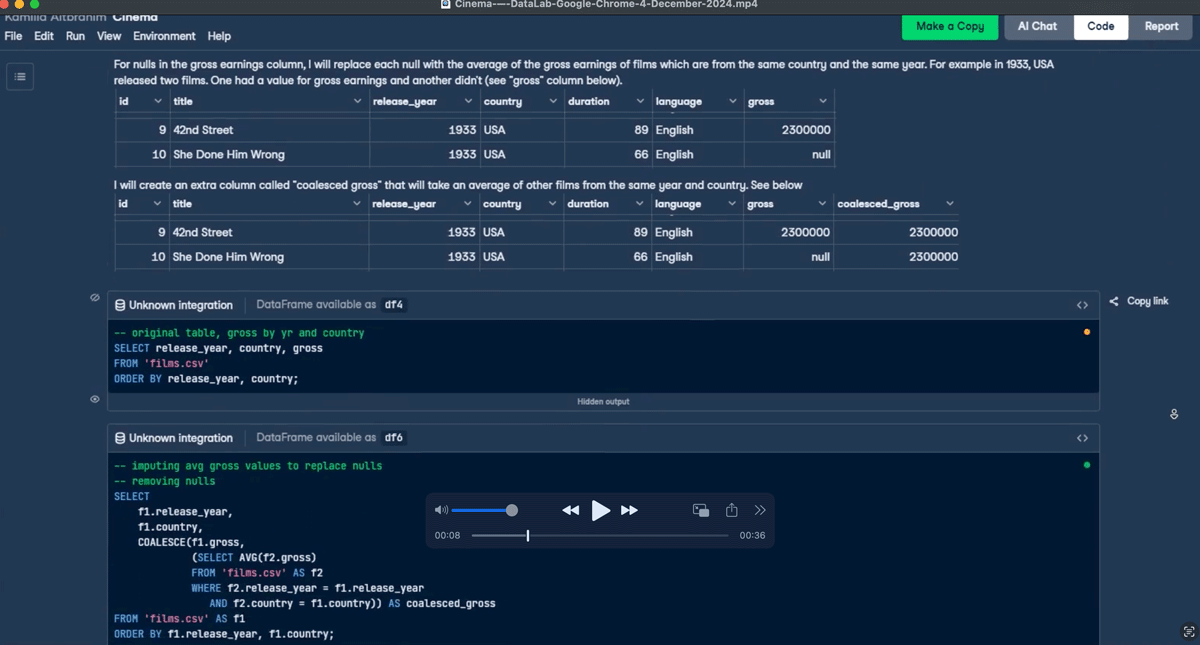
Employers will ask: “Can you show me something you’ve done?” Having a portfolio is the difference between “I’ve learned SQL” and “Here’s a dashboard I built analysing London housing prices.”
What to include in your portfolio:
- 2–3 complete analysis projects with clear business questions
- Well-documented Jupyter notebooks or Excel workbooks showing your process
- Power BI or Tableau dashboards that tell a visual story
- A brief write-up for each project explaining what you found and why it matters
Host your portfolio on GitHub (for code) and create a simple personal website or LinkedIn portfolio showcase. Many free website builders, like Wix, WordPress, or even just a well-organised Google Drive folder, can work.
5. Apply Data Thinking in Your Current Role
Still in retail, admin, or customer service? Use your new skills in your existing job:
- Track weekly sales or customer satisfaction in Excel
- Analyse survey responses or customer feedback
- Build a simple trend chart showing team performance over time
- Identify patterns in common customer complaints
These small wins add weight to your CV when it’s time to make the switch. You can legitimately say, “I used data analysis to identify that 70% of customer complaints occurred during peak hours, which led to adjusted staffing schedules.”
6. Build a Strong Network
Networking is crucial in data analysis, not only for learning but for uncovering new job opportunities before they get publicly listed. Join professional communities, attend industry events, and connect with experienced data professionals.
UK-focused networking opportunities:
- LinkedIn groups: “Data Science & Analytics UK,” “UK Data Professionals,” “Power BI User Group UK”
- Meetup.com events: Search for data analytics meetups in your city
- Royal Statistical Society — professional body with events and resources
- Data Science Festival UK — an annual conference with networking opportunities
- Local tech meetups: Many cities have regular data and analytics gatherings
Building relationships can open doors to new career opportunities and provide valuable insights. Many analysts report getting their first role through a connection they made at a meetup or online community.

7. Develop Your Soft Skills
Soft skills are essential for a successful data analyst. Focus on improving your communication as a primary skill, along with presentation abilities, critical thinking, and stakeholder management.
These abilities will help you:
- Present findings clearly to non-technical audiences
- Ask the right questions when scoping analysis projects
- Handle pushback when your data challenges assumptions
- Collaborate effectively with teams across the business
Not only will these skills be beneficial in your role as a data analyst, but you should also leverage them when applying for your first role. Showcasing your communication abilities in the interview will help you land that position. Consider using AI tools for feedback on practice interviews: starting here could help improve your confidence before stepping into real-world scenarios.
8. Learn Popular Project Management and Collaboration Tools
Familiarise yourself with common workplace tools beyond just data software. When joining a company or team, they may already have preferences on which tools work best for them. Knowing how to use them before you start your role will always make things easier for your employer and help you demonstrate your professionalism.
Common tools data analysts use:
- Jira — for tracking analysis requests and project tasks
- Confluence — for documentation and knowledge sharing
- Slack/Microsoft Teams — for team communication
- Git/GitHub — for version control (especially if coding in Python or R)
- Google Workspace or Microsoft 365 — for collaboration and sharing
Even basic familiarity shows you understand how modern teams work together.
9. Seek Mentorship
Find a data analyst mentor who can guide and support you through your career journey. A mentor with experience in data analysis can provide valuable advice, share industry insights, and help you navigate challenges.
Where to find mentors:
- LinkedIn (reach out respectfully to analysts whose work you admire)
- MentorCruise or ADPList (mentorship platforms)
- Local data meetups (in-person connections often lead to mentorship)
- Career Smarter’s support network (available to our program members)
10. Apply for Entry-Level Jobs
Look for entry-level data analyst roles or positions that involve data coordination or analysis assistance. These roles can provide you with hands-on experience and help you build your skills and confidence.
Common entry-level job titles to search for:
- Junior Data Analyst
- Data Analyst (Graduate/Entry-Level)
- Reporting Analyst
- Data Technician
- Business Intelligence Analyst (Junior)
- Insights Assistant
- Analytics Coordinator
- MI Analyst (Management Information)
Top UK job boards to use:
- Indeed
- Reed
- Totaljobs
- CV-Library
- LinkedIn Jobs
- Glassdoor
- CWJobs (strong for tech/data roles)
- Adzuna
- Monster
- Guardian Jobs
Tailor your CV applications to each job, emphasising how your skills align with the specific requirements of the listed role. Don’t just hit apply and wait; read further on strategies for effective job applications. Research the company, understand their industry, and mention specific tools or challenges they might face in your cover letter.
Pro tip: Try avoiding any data analyst programs that require significant upfront costs without clear accreditation or job placement support. Focus on recognised certifications and legitimate training providers.
Closing the Gap Between “No Experience” and “Job Ready”
Here’s the truth: becoming a Data Analyst with no experience isn’t about bluffing your way in. It’s about proving you’ve taken the time to learn, practice, and create evidence of your skills through structured training and guided support.
That’s exactly where learning providers like Career Smarter come in:
- Helping you pick the right accredited course for UK market demands
- Giving you real-world simulations to practice safely before entering the workplace
- Supporting you with career guidance so you know how to frame your skills in applications and interviews
- Providing ongoing support even after certification to help you land that first role
It’s a simple formula: learn → practice → prove. Do those three things consistently, and you could move from complete beginner to job-ready in under a year. Many of our successful learners make this transition in 6–9 months with focused effort.
The data analysis field is growing, the opportunities are real, and the pathway is clearer than ever. You don’t need a mathematics degree or years of experience; you just need commitment, the right training, and the courage to start.
If our more experienced data analyst readers have any additional insights or tips for becoming a data analyst that we can add to benefit our readers, please leave a comment below.
Explore Career Smarter’s Data Analyst Programmes to see how we support learners every step of the way — from certification to your first job offer.
Ready to take the next step? Visit our Data Analyst Job Programme page to learn more about how we can help you find your first role in data analytics.